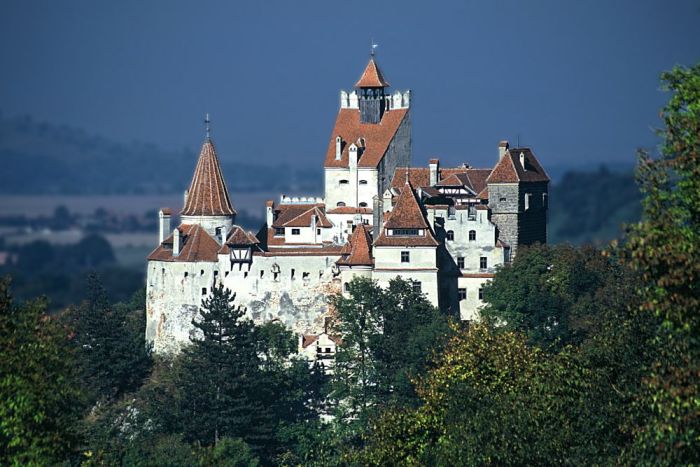
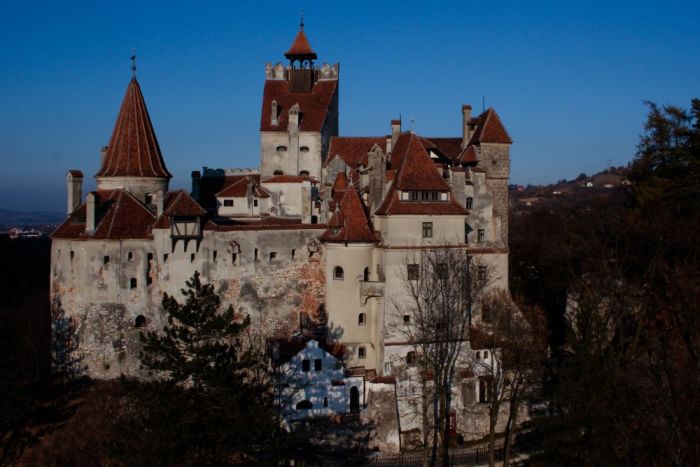
Greetings and Welcome to the Bran Castle!
The castle and estate gardens can be rent to host gala dinners, cocktail parties, concerts, balls, private tours, shows, fireworks displays and other prestigious events.

The Bran Castle is sited at the entrance to the Rucăr - Bran passage, on the road connecting Braşov to Câmpulung, overtowered by the peaks of the Bucegi and the Piatra Craiului Mountains. Bran is less than 30 km far from Braşov, when following the national route 73, which leaves Braşov by its West end, through the Bartolomeu district. The distance to Bucharest is of less than 200 km.

Bran (Dracula) Castle
The Teutons erected a fortress in Bran (a Turkish name meaning “gate”), before they were driven away from the area in 1226. Vlad the Impaler (Vlad Tepes) was allied with Bran and Brasov during his first reign (1436 – 1442) and through the start of his next reign, after the Princes of Transylvania requested that he handle the anti-Ottoman resistance at the border.

During his second reign (1456 – 1462), however, his army passed through Bran in early 1459 to attack Brasov, in order to settle a conflict between the Wallachia Voivode and the Saxons, who requested higher customs taxes and supported his opponent for the throne.

Vlad the Impaler burned the city’s suburbs and murdered hundreds of Saxons from Transylvania, provoking the Saxon community to seek revenge by later mentioning in reports that the Voivode were a tyrant and extremely ruthless.

Dracula – as known today – represents the result of the intersection of some real historical events, legendary, related to the reign of Vald Ţepes – Dracula, of mentions of some chroniclers of those times, aiming to put the great voivode in a bad light, amplified in the upcoming centuries by the association with the character of fiction novel "Dracula", issued in England in 1897, written by the Irish writer Bram Stocker.

The truth about Vlad Ţepes (1456-1462; 1476), prince of Ţara Românească, is known from numerous works of Romanian and foreign historians.

Convinced that only a harsh reign from the inside could install order in the country and organize successfully its defence from external dangers, Vlad Ţepes applies a domineering reign, imposing to its subjects honesty and diligence as virtues; dishonesty (theft), laziness and craftiness were harshly punished by impalement, a hard punishment, but which could be understood only related to the period he lived in, a very cruel period, which has known other punishments, equally harsh, such as burning at the stake, hanging, etc.